Platforms With Native Persistence and Scheduling for Autonomous Agents
Agents need one runtime that owns state, memory, and scheduling.
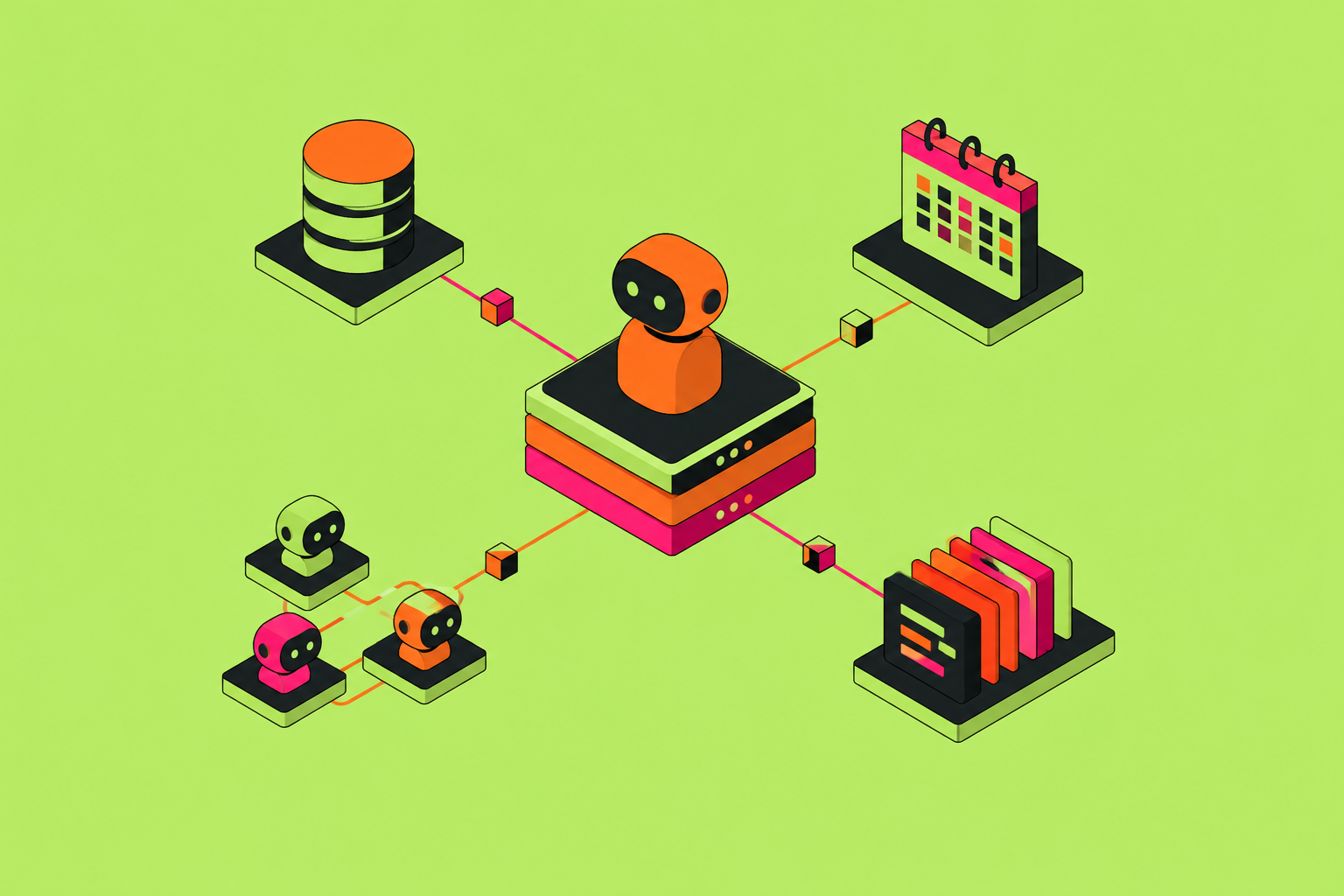
For persistent and scheduled autonomous agents to work at scale, they need a runtime that owns durable state, memory retrieval, and scheduling together. Managed hyperscaler runtimes, framework-native platforms, and sandbox runtimes place those responsibilities at different layers. An autonomous agent needs infrastructure that can resume work with its history and workflow position intact.
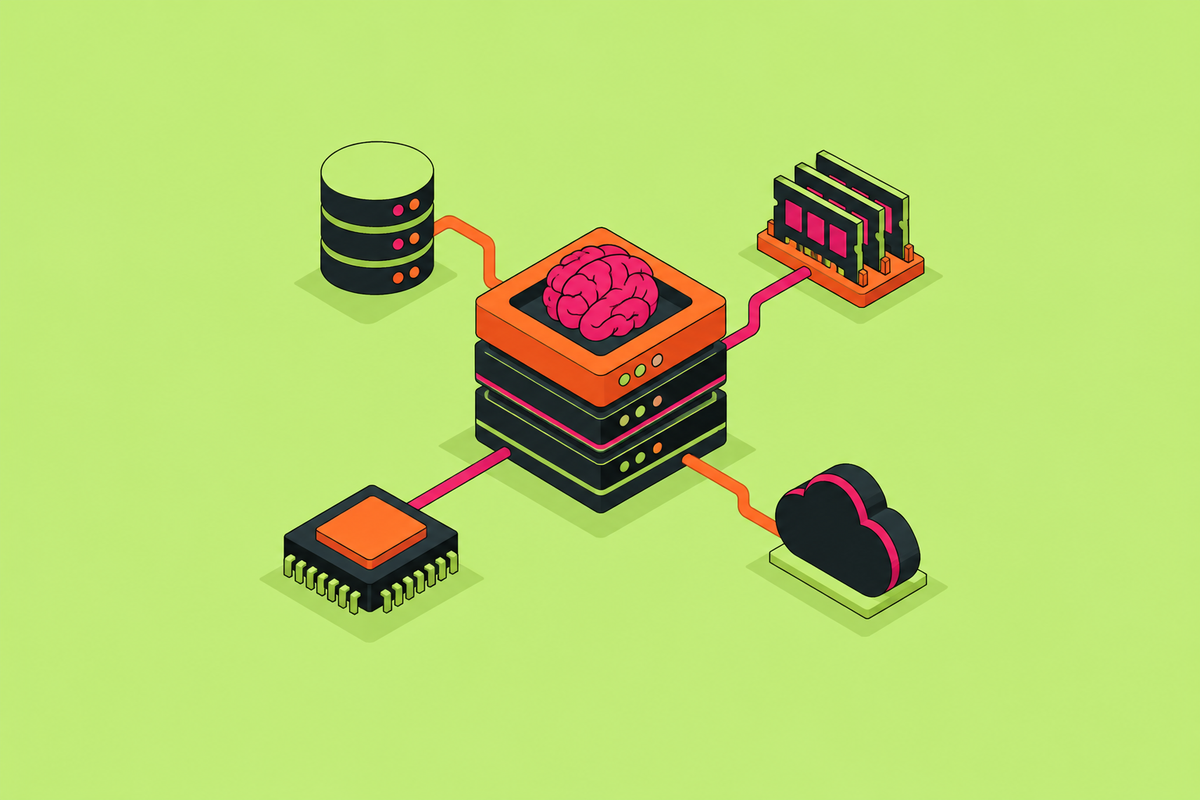
An agent that resumes work without a human prompt needs three things from its runtime: durable state that survives the end of a run, a memory layer that retrieves that history and feeds the relevant part into the next inference, and a scheduler that wakes the agent and resumes it at its prior workflow position. A cron trigger alone only fires a process. A durable-execution scheduler brings back prior state, tool authorizations, memory references, and the place in a multi-step workflow. Where the scheduler runs also matters, because one inside the agent's trust boundary can be influenced by the work it schedules.
Why most deployed "agents" are still just stateless chatbots
LLMs are stateless between calls by design. Each inference begins with a blank slate, so anything learned or done in an earlier call must come from a layer outside the model. A conversation that feels convincing can hide that need for a while. It becomes unavoidable when work must continue across sessions, survive an interruption, or begin without another human prompt.
Most enterprise deployments described as agents are routing logic or fixed sequences wrapped around a model call, rather than systems with planning, execution, and durable state. A fixed workflow can serve its purpose well. But an impressive single-session demo does not establish that the system can sustain goal-directed work, and a better model alone cannot supply the missing infrastructure.
The architectural threshold that separates a real agent from an expensive demo
Persistence and scheduling are minimum requirements for autonomy across sessions. Without durable state, an agent cannot retain what it learned, what it did, or what went wrong. Without scheduling, it remains dependent on a human prompt to begin again. These are not independent conveniences.
Ankur Sharma and Deep Shah’s 2026 Agent Operating System research frames the mismatch between conventional software and agentic systems [1]. Traditional operating-system abstractions assume bounded behavior and predictable interactions, while agents are long-lived, goal-directed entities that reason probabilistically, invoke tools dynamically, and adapt to feedback. The AOS reference architecture therefore gives the Runtime and Coordination Plane explicit responsibility for agent lifecycle, workflow coordination, context and memory coordination, and scheduling.
Just as an application depends on process scheduling and memory management, an autonomous agent depends on a runtime that supplies the corresponding services for its work. Each responsibility requires a clear architectural home, which can span multiple products. Evaluating platforms before asking whether persistence and scheduling are native or bolted on puts the questions in the wrong order.
Why context management and memory management are different problems, and why conflating them causes production failures
Context management governs what enters the model’s finite context window for one inference. Memory management stores what the agent knows and retrieves it across sessions. The two operate on different timescales and fail differently [1]. Context can fail through overflow or attention dilution within a run, while memory can fail through session amnesia or stale recall across runs. A platform that handles one has not necessarily handled the other.
A larger context window can hold more information during an inference, but when the run ends, the window is flushed. The next run needs a separate way to recover what was learned. Evaluate how much an agent can read at once, what survives, how that information is retrieved, and which part of it reaches the next inference.
Letta, formerly MemGPT, makes these roles explicit through a three-tier memory hierarchy. Its core memory is always in context and can be edited by the agent through tool calls. Recall memory provides searchable conversation history. Archival memory uses a built-in vector database and supports search by semantic similarity. The hierarchy keeps what the agent needs right now separate from the history and knowledge it must retrieve.
That separation is essential when scheduling enters the picture. An agent that wakes on a cron trigger but cannot access prior state starts without continuity. Stored history is also of little use if the next inference gets none of the information it needs from that history. Persistence must link what is in storage to recall, and what is recalled to context. Otherwise, a scheduled agent is simply a reactive agent that wakes itself up.
What the AOS research establishes about what a runtime must own natively
Sharma and Shah’s initial AOS paper, published in June 2026, decomposes the system into schedulers, context and memory management, tool and capability registries, policy and trust enforcement, and observability and audit. “Supports agents” is too broad to test. Responsibility for a specific function is something a platform can explain, including where that function runs and what the developer must supply.
The reference architecture is a proposal. It is also implementation-plural by design, allowing multiple conforming control planes, runtimes, registries, and policy engines to coexist. The practical distinction is whether the runtime supplies a coherent service or leaves the developer to assemble its behavior from external components. That distinction provides the evaluation lens for the runtime tiers that follow.
AgentKernel from Tsinghua’s DeepKernel Lab adds a stricter test of ownership. Its research argues that governance middleware sharing a process trust boundary with an agent is structurally insufficient. Instead, it proposes an operating-system substrate with mandatory, non-bypassable services for identity, input mediation, memory governance, and execution control. The boundary is part of the architecture. A runtime’s claim to own a responsibility is weaker if the agent it governs can influence or bypass that service.
How the three runtime tiers approach persistence and scheduling differently
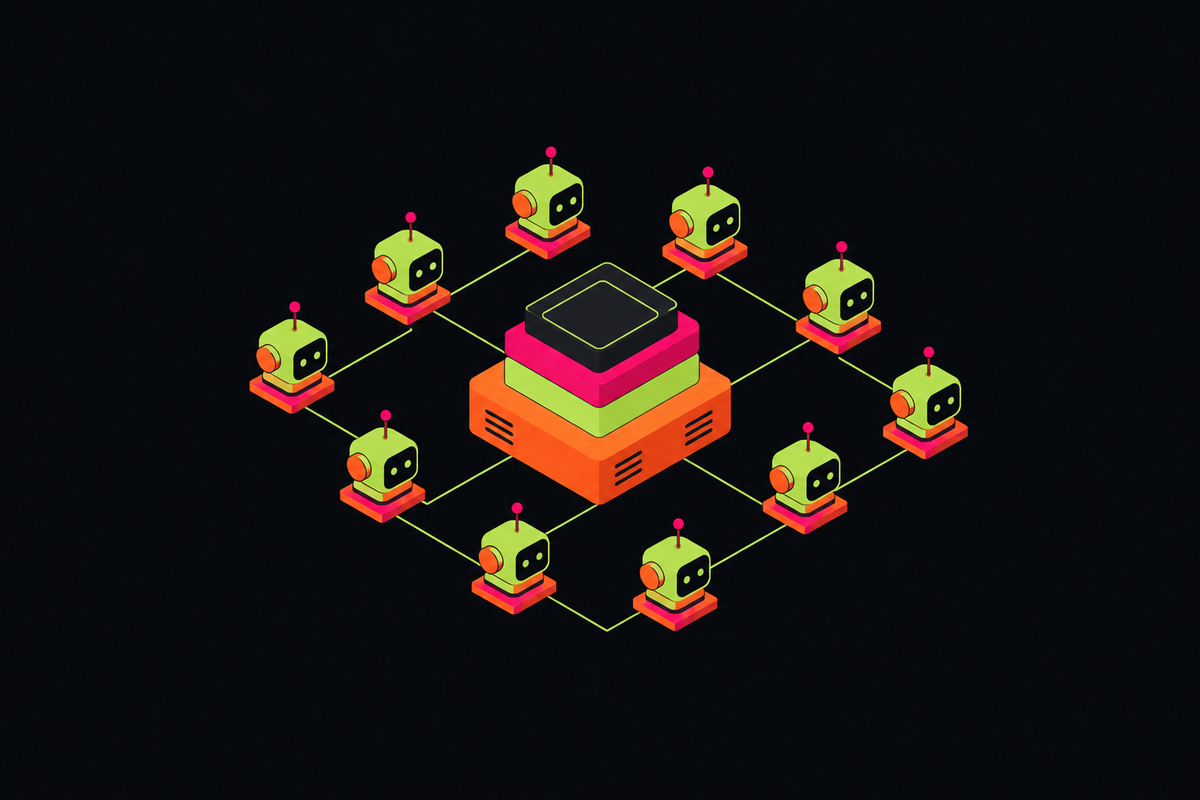
The three runtime tiers divide responsibility differently, so a useful shortlist begins with what the developer wants the platform to own. Managed hyperscaler runtimes offer managed services for session isolation, long-term memory, tool authorization, and cost control. Framework-native platforms express persistence and scheduling through their workflow abstractions. Sandbox and serverless runtimes emphasize isolation and cold-start latency. Their differences determine how much infrastructure remains an application-level job.
AWS Bedrock AgentCore, Google’s Gemini Enterprise Agent Platform / Vertex AI Agent Engine, and Azure AI Foundry Agent Service belong to the managed tier. AgentCore reached GA in October 2025, with runtime instances reaching GA in August 2026. It offers short-term event memory, built-in and self-managed long-term memories, and retrieval as managed primitives, each with its own price. A managed service removes assembly work, but its persistence components still need to fit the agent’s retrieval needs and cost model.
Azure’s service integrates Entra identity natively and uses a unified agent layer on the Responses API. Its model support is concentrated on Azure OpenAI models, making enterprise fit distinct from persistence alone. Session semantics and infrastructure assumptions travel poorly across runtimes, so adopting one means accepting its memory and scheduling model rather than treating those services as interchangeable.
LangGraph Platform and Microsoft Agent Framework are in the framework-native tier. Microsoft brought AutoGen and Semantic Kernel together in the unified framework, and its 1.0 release shipped on 3 April 2026. This tier favors composable workflows and tool routing, with persistence expressed as checkpoints within the framework’s graph model. Checkpoints make resumption durable, but not independent of the framework. The developer gains continuity through that execution model and accepts the coupling that comes with it.
Cloudflare Agents, Modal, Fly.io Machines, and Daytona occupy the sandbox and serverless tier. Most prioritize isolation and cold-start latency, with persistence added or supplied through an architectural extension. Cloudflare’s approach is notable because it attempts to make memory and scheduling native at the edge runtime layer. That is a different ownership choice. It places those responsibilities below the framework.
Temporal is a layer that sits beneath several agent products. It is a mature durable-execution substrate, and frameworks such as LangGraph can integrate it as an optional durability layer. Anthropic’s managed runtime uses its own proprietary infrastructure with no dependency on Temporal. These distinctions prevent a misleading universal ranking. A managed service, a checkpointed workflow, and a durable-execution substrate solve different portions of the problem, even when all are described as infrastructure for long-running agents.
What infrastructure do autonomous agents need to persist state and resume work without human prompts?
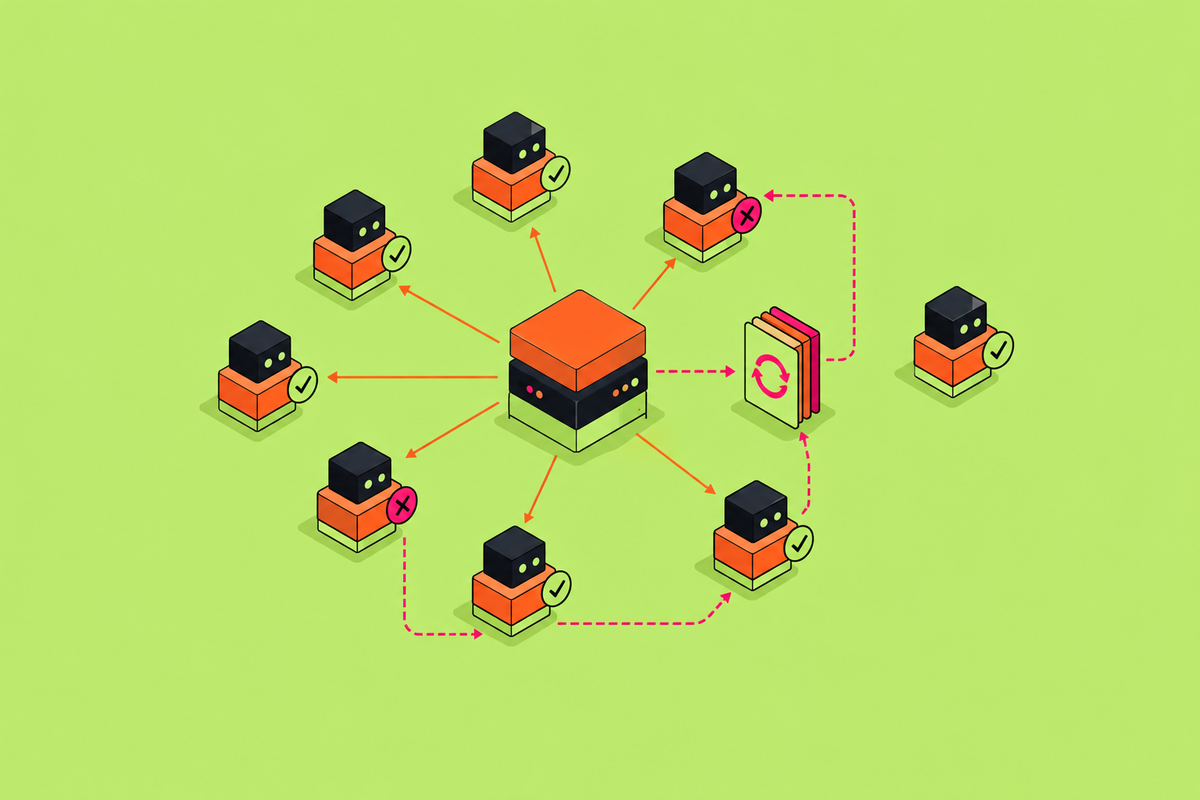
Scheduling for autonomous agents requires state continuity. A cron job fires a process, while a durable-execution scheduler resumes an agent. Prior state, tool authorizations, memory references, and the agent’s position in a multi-step workflow must remain available if the next action is to continue the same work.
Work that lasts hours or days must handle interruptions, human-in-the-loop checkpoints, and failure recovery while keeping its place. LangGraph Platform illustrates this requirement through its ability to pause for days and resume where it left off. A timer answers when execution begins.
Anthropic’s Claude Cowork launched in January 2026 as a local desktop agent, added scheduled recurring tasks in February 2026, and added persistent server-side cloud sessions in July 2026, with async long-running tasks also part of the offering. This combination joins timing to continuity. With scheduling but no persistence, the developer must build the link between a later wake-up and earlier work.
AgentKernel supplies a further reason to inspect the scheduler’s location. Its research argues that scheduling belongs at the kernel level because middleware inside the agent’s shared trust boundary can let a compromised task change its own schedule. Native scheduling is more than convenient syntax. It also requires an execution-control boundary outside the agent’s influence, so the component deciding when work runs is not governed by that same work.
What to verify before trusting a platform's persistence and scheduling claims
For a team choosing infrastructure, the lesson is to turn broad capability claims into questions about ownership and recovery. Start with whether the runtime stores and retrieves memory natively or requires an external vector store and developer-written retrieval logic. Then ask whether it distinguishes context management from memory management. The names alone are not enough. A platform should explain what goes into one inference and what the agent can still access across sessions.
Recovery deserves its own set of questions. What happens to state after a process restart, runtime update, or infrastructure failure, and is recovery automatic or manual? Which retrieval patterns does the memory layer support, including key-value lookups, semantic search, time-ordered recall, and graph-based multi-hop reasoning? A memory service must support the way the agent needs to recover and use its past.
For scheduling, ask whether a trigger resumes prior state or starts a fresh process that must reconstruct context. Can work pause for human input and continue without losing its workflow position? What does the platform guarantee for at-least-once or exactly-once execution of scheduled tasks? Then locate the scheduler’s trust boundary. A platform should explain whether scheduling is enforced by the runtime or kernel, or implemented as middleware the agent can influence.
Finally, map the platform against the AOS Runtime and Coordination Plane responsibilities, including agent lifecycle, workflow coordination, context and memory coordination, scheduling, traffic management, and runtime assurance. For each responsibility, ask what the runtime owns and what the developer must assemble. The same test applies across all three tiers. Infrastructure designed from first principles for agentic workloads will answer these questions at the architecture level, while retrofitted tooling will answer them with workarounds.